If you have ever felt like your emotions are running the show, you are not alone. Maybe anger, sadness, or anxiety hits you so hard and so fast that you barely have time to think before you react. There is nothing wrong with you. Your emotions are simply more intense, and you may never have been taught the skills to manage them.
Dialectical Behavior Therapy (DBT) is a structured, evidence-based therapy developed specifically for people who experience emotions very intensely. It teaches practical skills for managing those emotions, tolerating distress, and building healthier relationships. In this guide, we will walk through what DBT stands for, how it works, the story behind its creation, and the core skills that make it so effective.
What Does DBT Stand For?
DBT stands for Dialectical Behavior Therapy. The word “dialectical” might sound intimidating, but the concept is simple: two things that seem like opposites can both be true at the same time.
In DBT, those two things are acceptance and change. You can accept yourself exactly as you are right now, with all your feelings and flaws, while also working to make meaningful changes in your life. This balance is what makes DBT different from many other therapies. Instead of telling you to just “think differently” or “stop feeling that way,” DBT meets you where you are and helps you move forward from there.
Think of it like this: imagine holding two pieces of a puzzle. One piece says, “I am struggling right now, and that is okay.” The other says, “I can learn new ways to handle this.” DBT is the framework that lets those two pieces fit together. According to the Cleveland Clinic, this balance of acceptance and change is the foundation that makes DBT effective for people dealing with intense emotional experiences.

The History of DBT: How a Personal Story Became a Therapy
The story of DBT begins in the 1980s with a psychologist named Dr. Marsha Linehan at the University of Washington. At the time, Linehan was working with people who struggled with severe emotional dysregulation, self-harm, and suicidal behavior. She noticed that traditional Cognitive Behavioral Therapy (CBT), the gold standard for most mental health conditions, was not working for these clients. In fact, many of them were dropping out of therapy entirely because they felt invalidated by the approach.
Linehan asked a critical question: what if the problem was not that these individuals needed more change, but that they needed more acceptance first? She redesigned the therapy to include both acceptance strategies (like mindfulness) and change strategies (like behavior modification), creating the dialectical framework that defines DBT today.
What makes this history especially powerful is that Dr. Linehan has spoken publicly about her own personal experiences with emotional dysregulation. She understands firsthand what it feels like to be overwhelmed by emotions, and that lived experience shaped every aspect of the therapy she created.
Linehan also developed the biosocial theory, which explains why some people struggle more with emotions than others. It holds that emotional dysregulation develops from a combination of biological sensitivity and an invalidating environment, teaching a person that their feelings are wrong or unacceptable.
Her foundational work, published in 1993 as Cognitive-Behavioral Treatment of Borderline Personality Disorder, established DBT as the first therapy specifically designed and tested for borderline personality disorder. Since then, it has expanded to help people with a wide range of emotional challenges.
How Does DBT Work?
DBT works by combining several treatment components into a structured program. Unlike many therapies that focus on one format, DBT uses a multi-layered approach that gives you support in multiple ways. This is intentional: if you are struggling with intense emotions, you need more than a single weekly session to make real progress.
The three main components of DBT treatment are:
- Individual therapy sessions: One-on-one meetings with a DBT-trained therapist where you work on personal goals, identify behavior patterns, and apply DBT skills to real-life challenges.
- Group skills training: In a group setting, you learn and practice the four core DBT skills alongside others. Groups typically meet weekly and function more like a class than a therapy session. You receive homework assignments to practice the skills between sessions.
- Phone coaching: Between sessions, you can reach out to your therapist for brief coaching when you are in a crisis or struggling to apply a skill in the moment. This real-time support helps bridge the gap between learning a skill and using it when it matters most.
The skills are taught in modules that rotate throughout treatment, so you get comprehensive training across all four skill areas.
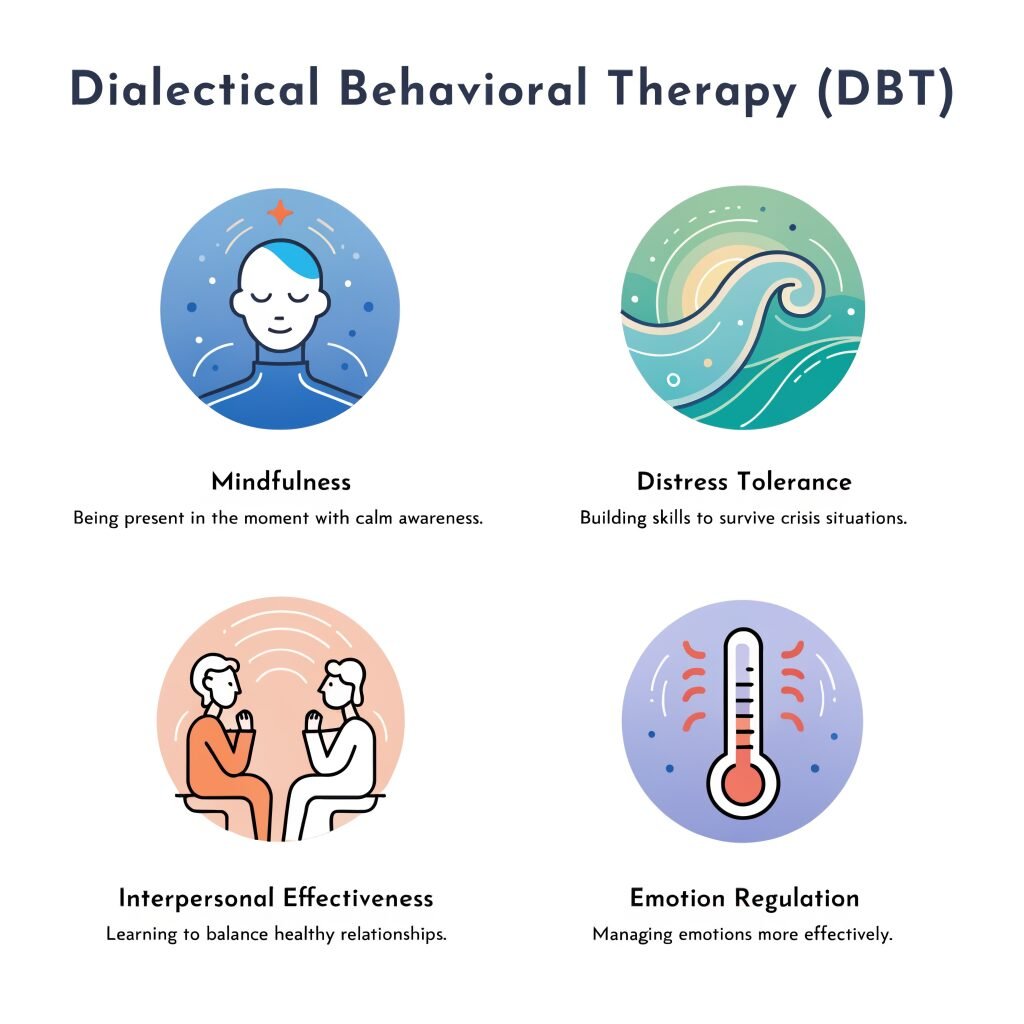
The Four Core Skills of DBT
At the heart of DBT are four sets of practical skills. These are not abstract concepts or theories. They are concrete tools you can use in your daily life. Think of them as a toolkit for managing emotions, getting through tough moments, and building relationships that actually work.
1. Mindfulness
Mindfulness is the foundation that supports all the other DBT skills. It is the practice of staying present in the moment, observing your thoughts and feelings without judging them as good or bad. For someone who experiences emotions intensely, this skill can be life-changing.
For example, when anxiety starts rising before a big meeting, instead of spiraling into worst-case scenarios, you pause and notice what you are actually experiencing. That pause creates space between the feeling and your reaction, and that space is where change happens.
2. Distress Tolerance
Distress tolerance skills are about surviving crisis situations without making them worse. This is not about feeling better in the moment. It is about getting through the moment without doing something you will regret later.
One of the key concepts in this skill set is radical acceptance, which means accepting reality exactly as it is, not as you wish it were. When you receive bad news, for example, instead of fighting the reality of the situation or reacting impulsively, you acknowledge what has happened and use skills like TIPP (Temperature change, Intense exercise, Paced breathing, and Paired muscle relaxation) to calm your nervous system.
3. Emotion Regulation
Emotion regulation skills help you understand, identify, and manage your intense emotions. This is not about suppressing your feelings or pretending everything is fine. It is about reducing the intensity of emotions over time so they do not control your life.
You learn to recognize what you are feeling, what triggered that feeling, and how to reduce emotional vulnerability through practical steps like getting enough sleep, eating well, and exercising regularly.
4. Interpersonal Effectiveness
Interpersonal effectiveness skills teach you how to communicate your needs clearly, set healthy boundaries, and maintain meaningful relationships.
One of the frameworks taught in this module is DEAR MAN, an acronym that guides you through effective communication: Describe the situation, Express how you feel, Assert what you need, Reinforce the positive outcome, stay Mindful of your goal, Appear confident, and Negotiate when appropriate. Instead of people-pleasing until you explode, you learn to ask for what you need in a direct, respectful way.
DBT vs CBT: What Is the Difference?
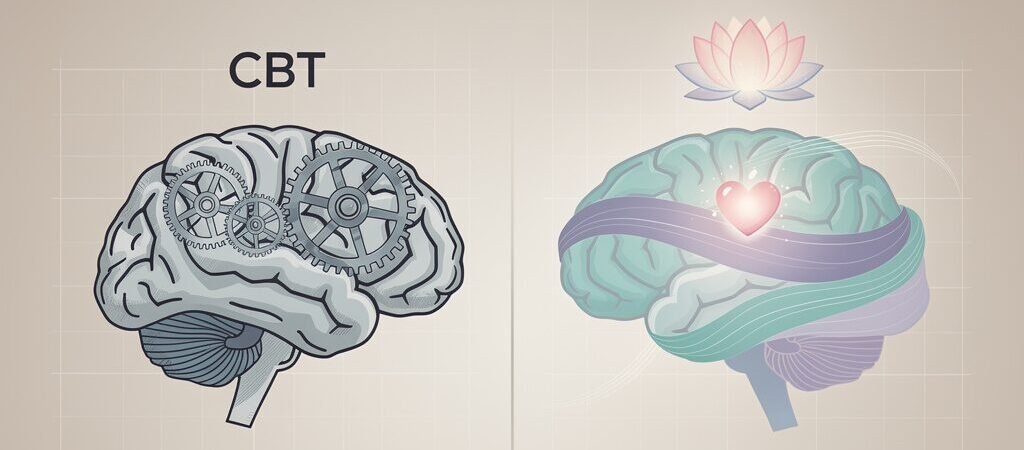
Many people wonder how DBT compares to Cognitive Behavioral Therapy (CBT). DBT was developed from CBT, so they share some DNA, but they are designed for different needs.
Here is a quick comparison:
| Aspect | CBT | DBT |
|---|---|---|
| Focus | Changing negative thought patterns | Balancing acceptance with change; managing intense emotions |
| Best for | Anxiety, depression, phobias | Intense emotions, self-harm, BPD, emotional dysregulation |
| Key Skills | Cognitive restructuring, exposure therapy | Mindfulness, distress tolerance, emotion regulation, interpersonal effectiveness |
| Structure | Typically individual sessions | Individual therapy + group skills training + phone coaching |
The biggest difference is that CBT primarily focuses on changing how you think, while DBT focuses on accepting where you are while building skills to change how you respond. If you are dealing with intense emotions that feel unmanageable, DBT may be a better fit. If you are dealing more with anxiety, depression, or negative thought patterns, CBT could be the right path. Of course, the best way to know is to talk with a therapist who can help you figure out what you need.
If you want to learn more about CBT, check out our guide to Cognitive Behavioral Therapy.
Who Can Benefit from DBT?
DBT was originally developed for people with borderline personality disorder (BPD), but research has shown it is effective for a much wider range of people.
DBT can be especially helpful if you:
- Experience emotions much more intensely than the people around you
- Struggle with self-harm or have had thoughts of suicide
- Deal with chronic feelings of emptiness or emotional numbness
- Find that your relationships are unstable or full of conflict
- Feel like your emotions are controlling your life instead of the other way around
DBT has also been shown to help people dealing with depression, anxiety, eating disorders, and substance use disorders. Dr. Marsha Linehan described the ultimate goal of DBT as helping people build “a life worth living”, and that goal applies to anyone who wants to feel more in control of their emotional experience.
If you are wondering whether DBT might be a good fit for you, learn more about DBT therapy at Abalance or reach out to schedule a consultation.
How Long Does DBT Take?
Standard DBT is typically a six to twelve month commitment. That may sound like a long time, but the structure is designed to build skills gradually.
Because the skills build on each other, many people begin noticing improvements in the first few months. The full benefits tend to develop over the entire course of treatment, and some people choose to continue with booster sessions afterward.
The skills you learn in DBT are tools you will carry with you for life.
Is DBT Effective?
The short answer is yes. DBT is one of the most well-researched therapies available.
A 2017 meta-analysis found that DBT significantly reduces self-harm, suicide attempts, and hospitalizations, with moderate to large effect sizes across multiple outcomes. A 2020 meta-analysis confirmed its effectiveness for depression, anxiety, eating disorders, and substance use disorders.
At Abalance Counseling, we have seen firsthand how DBT can transform lives. The combination of structured skills training, individual therapy, and real-time coaching creates a support system that helps people make lasting changes.
Your Next Steps: Is DBT Right for You?

If you have read this far, something about DBT has resonated with you. Maybe you recognized yourself in the descriptions of intense emotions. Maybe the idea of acceptance and change finally feels like an approach that could work for you. Trust that instinct.
DBT is a practical, skills-based therapy designed for real people dealing with real emotional challenges. It does not ask you to be someone you are not. It meets you where you are and gives you the tools to build a life you genuinely value.
If you think DBT might be helpful for you, learn more about DBT therapy at Abalance or schedule a consultation to find out if it is the right fit.
You do not have to figure this out alone. Visit our blog for more resources, or contact us today to take the first step.
Published on August 12, 2026. This article is for informational purposes only and is not a substitute for professional medical advice, diagnosis, or treatment. If you are in crisis, please contact the 988 Suicide and Crisis Lifeline by calling or texting 988.