If your mind races with worry, your chest tightens before social plans, or a small stressor spirals into a full panic attack, you are not alone. Anxiety is one of the most common mental health challenges in the United States, and there is a therapy approach designed to help you build real, practical skills to manage it. It is called dialectical behavior therapy, or DBT.
DBT for anxiety is a skills-based therapy that teaches you how to manage overwhelming emotions, stay present in difficult moments, and respond to stress in healthier ways. It is not about talking about your feelings in the abstract. It is about giving you concrete tools you can use right away. If anxiety is affecting your daily life, our anxiety treatment at Abalance Counseling starts with understanding what you are experiencing.
In this post, you will learn what DBT is, how it helps with anxiety, what a real session looks like, and whether it is the right fit for you.
Understanding DBT and Anxiety
Before we talk about how DBT helps anxiety, let us make sure we are on the same page about what DBT is and why anxiety responds so well to it.
What Is DBT?
Dialectical behavior therapy (DBT) is a type of cognitive-behavioral treatment that teaches practical skills to manage overwhelming emotions. It was developed by Dr. Marsha Linehan in the 1980s, originally to help people experiencing intense emotional distress. Since then, research has shown it is effective for many conditions, including anxiety disorders.
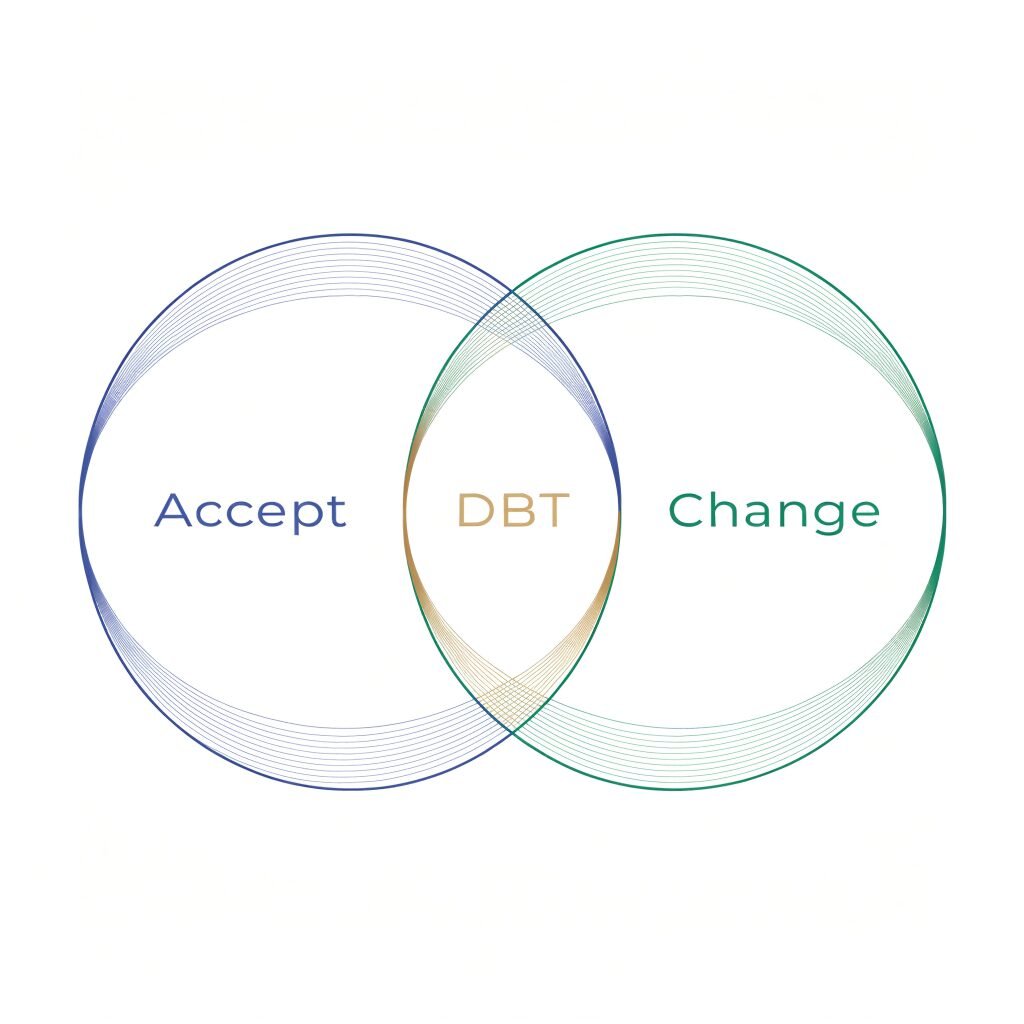
The word “dialectical” might sound complicated, but the idea is simple: it means holding two truths at once. You can accept yourself as you are and work toward change at the same time. This balance of acceptance and growth is what makes DBT different from traditional talk therapy. DBT is structured, skills-based, and focused on what you can do in everyday life.
Why DBT Works for Anxiety
Anxiety often lives in the gap between the present moment and a feared future. You might be safe in your living room, but your mind is already rehearsing a worst-case scenario at work tomorrow. DBT’s mindfulness skills pull you back to the now, where you can actually do something about what you are feeling.
Anxiety is an emotion, and DBT is built around understanding and regulating emotions. That makes it a natural fit. According to the National Institute of Mental Health, anxiety disorders affect an estimated 19.1% of U.S. adults each year. If you have been struggling, the numbers alone show you are not the only one looking for answers.
The good news is that you do not need to “fix” yourself first. DBT meets you where you are. Whether your anxiety is mild or severe, whether it has been there for months or years, the skills you learn can help you respond to it differently.
The Four DBT Skills for Managing Anxiety
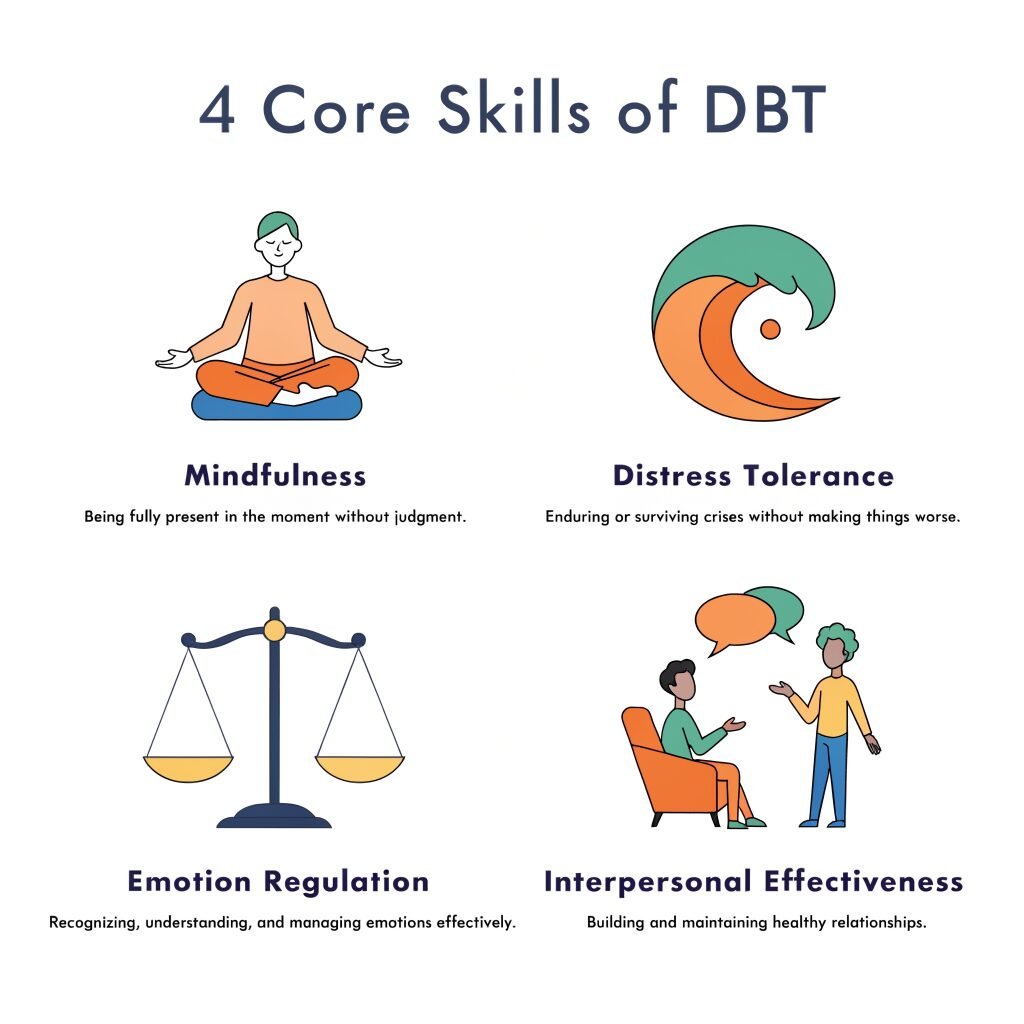
DBT organizes its tools into four skill areas, often called modules. Think of them as a toolbox you build over time. Each skill is something you practice and keep for life. According to the Cleveland Clinic, these four modules work together to help people manage intense emotions. Here is how each one helps with anxiety.
Mindfulness: Staying Present When Anxiety Strikes
Mindfulness is noticing the present moment without judgment. Anxiety pulls you into the future with thoughts like “what if this goes wrong?” Mindfulness anchors you in the now, where you can actually deal with what is in front of you.
A simple technique to try is the 5-4-3-2-1 grounding exercise. Name five things you can see, four things you can touch, three things you can hear, two things you can smell, and one thing you can taste. It sounds basic, but it works because it forces your brain to focus on what is real and present instead of what might happen.
Distress Tolerance: Getting Through Panic and Overwhelm
Distress tolerance is about surviving intense moments without making them worse. When anxiety spikes, your first instinct might be to avoid, withdraw, or react impulsively. Distress tolerance gives you alternatives.
One helpful set of skills is called TIPP. It stands for Temperature (cold water on your face or holding ice), Intense exercise, Paced breathing, and Paused muscle relaxation. These techniques work quickly because they change your body’s chemistry, lowering your heart rate and calming your nervous system. Distress tolerance also includes grounding techniques and radical acceptance, which means accepting reality as it is, without giving up on making changes.
Emotion Regulation: Understanding Your Anxious Emotions
Emotion regulation is identifying what you feel, understanding why, and choosing how to respond. Many people with anxiety feel like their emotions are out of their control. This skill set helps you see patterns and make intentional choices.
One technique is called check the facts. When worry hits, you pause and ask: is the fear proportional to the situation? What evidence do I actually have? This is not about dismissing your feelings. It is about testing whether your emotions match what is really happening. Emotion regulation also includes the PLEASE skills: treating Physical illness, Eating balanced meals, Avoiding mood-altering substances, Sleeping well, and Exercise. These everyday habits form the foundation of emotional stability.
Interpersonal Effectiveness: Managing Social Anxiety
Interpersonal effectiveness is about getting your needs met while keeping relationships healthy. This is especially powerful for social anxiety, where fear of judgment or rejection can make conversations feel impossible.
One tool is the DEAR MAN script, a step-by-step way to have difficult conversations. It stands for Describe the situation, Express how you feel, Assert what you need, Reinforce why it matters, stay Mindful of your goal, Appear confident, and Negotiate if needed. Having a script removes the guesswork and helps you speak up instead of shutting down.
What DBT Looks Like for Anxiety Treatment
Understanding the skills is one thing. Knowing what actually happens in therapy is another. As Harvard Health explains, DBT combines individual therapy with group skills training. Here is what you can expect.
Individual Therapy Sessions
You will meet one-on-one with your therapist, typically once a week for about 50 minutes. Sessions usually follow a rhythm: you check in on how the week went, talk through what was hard, learn or practice a skill together, and plan how to use it in the coming week.
Your therapist is a guide and coach, not a lecturer. The goal is to help you apply DBT skills to your specific triggers and goals.
Skills Group Sessions
DBT often includes a weekly skills group, usually 1.5 to 2 hours, where you learn skills alongside other people. It works like a class: a skill is taught, you practice it together, and discuss how to apply it in real life.
You share as much or as little as you are comfortable with. Many people find that hearing others describe similar experiences makes them feel less alone.
Homework and Practice Between Sessions
DBT includes practice between sessions, but do not let the word “homework” scare you. This is practice, like building a muscle. You might fill out a brief diary card tracking your emotions, or try a specific skill during a stressful moment.
The more you practice in real life, the more natural these skills become.

DBT for Specific Anxiety Symptoms
Anxiety shows up differently for everyone. DBT skills map to each pattern, so you can target the specific way anxiety affects you.
For Panic Attacks
Panic attacks feel like emergencies. Your heart races, your breathing shortens, and your mind tells you something is very wrong. DBT’s distress tolerance skills, especially TIPP and grounding techniques, are first aid in the moment. Over time, emotion regulation skills help you notice early warning signs before a full panic wave hits.
For Chronic Worry
Generalized anxiety often means constant “what if” thinking. Mindfulness interrupts that loop by bringing you back to the present. Then, check the facts helps you test whether the worry actually matches reality. Over time, you learn to recognize worry for what it is: a thought, not a fact.
For Social Anxiety
Social anxiety involves fear of judgment, rejection, or saying the wrong thing. Interpersonal effectiveness gives you scripts and skills for conversations, so you are not guessing what to say. Meanwhile, mindfulness reduces the spiral of replaying interactions afterward. According to research published on PubMed, DBT skills have been shown to reduce anxiety symptoms across multiple anxiety disorders.
How Long Does DBT Take to Help with Anxiety?
Most people notice initial improvement in four to six weeks of consistent practice. Full benefits typically develop over six to twelve months. Skills take time to build, just like any new ability. Some days will feel harder than others, and that is normal. Results vary by person, but progress is possible, and it starts with showing up.
DBT vs. Other Anxiety Treatments
DBT is one evidence-based option, but not the only one. The goal is matching the approach to you and your needs.
DBT vs. CBT
Cognitive behavioral therapy (CBT) focuses on changing unhelpful thought patterns and behaviors. CBT is well-supported for anxiety and is often the first-line treatment. DBT includes CBT techniques but adds a strong focus on emotions, acceptance, and distress tolerance. Both are evidence-based. DBT can be especially helpful if emotions feel overwhelming.
Learn more about cognitive behavioral therapy at Abalance and read our CBT beginner’s guide for a full walkthrough.
When DBT May Be Right for You
DBT may be a good fit if:
- You want practical, hands-on skills rather than just talking about your feelings
- You feel emotions intensely and sometimes struggle to control your reactions
- You have tried talk therapy before and want more structure
- Anxiety shows up alongside other challenges like depression, trauma, or self-harm
DBT may be less central if you are primarily looking for short-term, thought-focused work. But a clinician can help you decide. Our DBT services are designed to meet you where you are.

What to Expect at Abalance Counseling
Abalance Counseling serves adults across California’s Central Valley and Coastal Region, with both in-person and teletherapy options. The first step is simple: reach out, share what you are experiencing, and a clinician will help you figure out if DBT is the right fit for you.
We know that asking for help takes courage. Our team is here to make the next step as easy as possible. We can talk through insurance coverage, session frequency, and costs so you know what to expect before you begin.
You can learn more about our DBT services, meet our team, or contact us today to get started. You do not have to face anxiety alone.
Key Takeaways
Anxiety can feel overwhelming, but it does not have to run your life. DBT offers a practical, skills-based approach to managing anxiety. Here is what to remember:
- DBT teaches practical skills to manage anxiety, not just talk about it
- The four skill areas are mindfulness, distress tolerance, emotion regulation, and interpersonal effectiveness
- A typical DBT program combines individual sessions, skills group, and practice between sessions
- Most people notice improvement within weeks, with full benefits developing over months
- Abalance Counseling offers DBT for anxiety in California’s Central Valley and Coastal Region, including teletherapy
If anxiety has been running the show, you do not have to face it alone. Our team at Abalance Counseling is here to help you build the skills to take back control. Schedule a consultation and contact us today.