
Starting therapy is a big step. Whether you have been thinking about it for weeks or just decided yesterday, it is completely normal to feel nervous. You might wonder what your therapist will ask, whether you will know what to say, or if online therapy even works as well as sitting in an office.
If you are considering teletherapy for anxiety and depression, knowing what happens in that first session can make all the difference. In this guide, we will walk you through every step: how to prepare, what your therapist will ask, and why so many people are choosing online therapy as their first step toward feeling better.
You do not need to have everything figured out before your first session. That is what therapy is for. Let us take a look at what to expect.
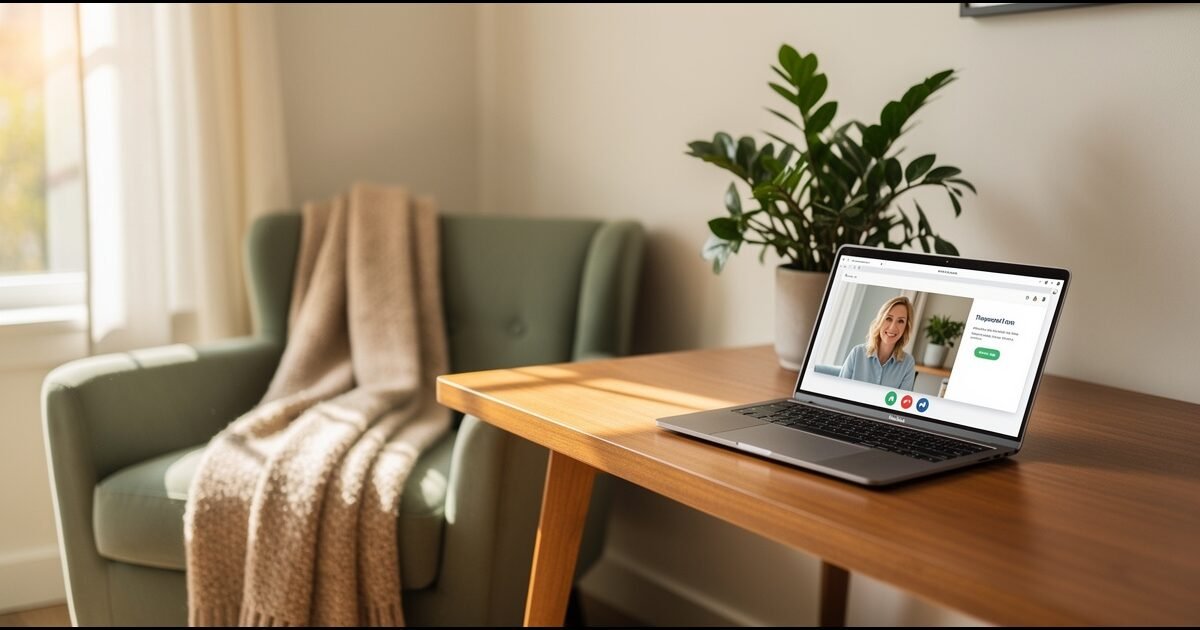
Why People Are Choosing Teletherapy for Anxiety and Depression
Teletherapy has grown from a niche option into one of the most popular ways to access mental health care. And there are good reasons for that.
For starters, it removes many of the barriers that keep people from seeking help. There is no commute, no waiting room, and no need to rearrange your entire day. You can attend sessions from the comfort of your own home, a quiet office, or even a parked car if that is the most private space you have. That kind of flexibility matters when you are juggling work, childcare, or school.
Privacy is another big one. Some people feel uncomfortable about being seen at a therapist’s office. With teletherapy, that concern disappears entirely.
The numbers tell a compelling story about how mainstream teletherapy has become. According to McKinsey & Company, 58% of mental health visits in 2023 were conducted via telehealth, up from roughly 1% before the pandemic. A FAIR Health report found that 62.3% of all telehealth claims in the United States are for mental health services. And the global online therapy market reached $4.38 billion in 2025 and continues to grow, according to Grand View Research.
Teletherapy is not a compromise. It is a well-established, evidence-based way to get the support you need.
What Happens Before Your First Online Therapy Session
A little preparation can go a long way toward easing first-session nerves. Here is what happens before you even log in.
Scheduling and Paperwork
Scheduling your first session is straightforward. You can contact Abalance Counseling by phone or through the website’s contact form. The office staff will verify your insurance and help you find a time that works.
Before your appointment, you will receive intake paperwork to complete online. This includes consent forms, HIPAA privacy agreements, and confidentiality policies. You may also fill out clinical assessments like the PHQ-9 (a depression screening) or the GAD-7 (an anxiety screening). These are not tests with right or wrong answers. They simply help your therapist understand where you are starting from.
Setting Up Your Technology
You do not need fancy equipment. A computer, tablet, or smartphone with a camera and microphone is all you need. A stable internet connection of at least 10 Mbps works best, and an Ethernet cable is more reliable than Wi-Fi if you have the option.
Abalance Counseling uses Zoom for telehealth sessions, which is fully HIPAA-compliant. You will receive an email with a session link, and all you have to do is click it to join. Before your session, shut down any background apps that use your camera or bandwidth to keep things running smoothly.

What to Expect During Your First Teletherapy Session
Knowing what will happen during the session itself can help you feel more at ease. Here is a breakdown of what the first appointment typically looks like.
The Intake Conversation
When you join the session, your therapist will introduce themselves and explain how the appointment will work. They will ask about what brought you to therapy: your symptoms, your concerns, and how anxiety or depression is showing up in your daily life.
Your therapist will also review confidentiality and explain the few situations where they are required to break it (such as if you are in immediate danger). This is standard and happens in every first session, whether online or in person.
Here is something many people do not realize: your first session is more like a relaxed conversation than an interview. Your therapist is there to listen and to learn about you, not to put you on the spot.
Discussing Your Goals and Concerns
Partway through the session, your therapist will ask what you hope to get out of therapy. This is a collaborative process. You do not need to have all the answers. Common goals include reducing anxiety, managing depression symptoms, improving sleep, building coping skills, or processing difficult emotions.
Your therapist may also ask about your support system, your work or school situation, your sleep patterns, and your physical health. These details help them understand the full picture of what you are dealing with.
Building Rapport With Your Therapist
The relationship you build with your therapist is one of the strongest predictors of positive outcomes in therapy. It is okay if it takes a few sessions to feel fully comfortable. That is completely normal.
You are welcome to ask your therapist about their approach, their experience, and their style. And if the fit does not feel right after a few sessions, it is perfectly okay to explore other options. Finding the right therapist is part of the process.
Your first online therapy session typically involves introductions, a discussion of your goals and concerns, and an overview of how the therapist works. The session usually lasts 45 to 60 minutes and focuses on building rapport rather than deep emotional exploration. Your therapist will explain confidentiality and answer any questions you have.

Common Questions Therapists Ask in the First Session
If you are wondering what your therapist will actually ask you, here are some of the most common questions. Knowing these ahead of time can help you feel more prepared.
- “What brought you to therapy?” Your reason for seeking help. There is no wrong answer.
- “How long have you been feeling this way?” This helps your therapist understand the timeline of your symptoms.
- “Have you been in therapy before?” Past experiences can guide the approach your therapist takes.
- “What is your daily life like?” Work, relationships, sleep, diet, and exercise all matter.
- “Are you taking any medications?” This is important for coordinating your care.
- “Have you had thoughts of harming yourself?” This is a standard safety assessment. Therapists ask this of every client.
These questions are designed to understand your unique situation, not to judge you. You can share as much or as little as you feel comfortable with.
How Teletherapy Works for Anxiety and Depression
One of the most common questions people ask is whether teletherapy actually works for anxiety and depression. The short answer is yes. Teletherapy uses the same evidence-based approaches as in-person therapy, including Cognitive Behavioral Therapy (CBT), which is one of the most well-researched treatments for both conditions.
CBT for anxiety helps you identify anxious thought patterns, such as catastrophizing (assuming the worst will happen), overgeneralizing (believing one bad event means everything is bad), or mind reading (thinking you know what others are thinking). Your therapist will help you replace these patterns with more balanced, realistic thinking. They may also teach you exposure techniques and relaxation strategies.
CBT for depression focuses on behavioral activation (scheduling activities that boost your mood) and cognitive restructuring (changing the negative thought patterns that keep you stuck). Both approaches translate well to the online format.
The research backs this up. A 2020 meta-analysis by Luo et al. covering over 1,500 participants found that videoconference-based psychotherapy was noninferior to in-person therapy across multiple diagnoses, including depression and anxiety. A 2021 study comparing telehealth to in-person care in intensive-treatment-seeking adults found comparable outcomes at discharge.
Teletherapy for anxiety works similarly to in-person therapy. You meet with a licensed therapist via secure video, phone, or messaging platform. Sessions typically use evidence-based approaches like cognitive behavioral therapy (CBT) to help you identify anxious thought patterns and develop coping strategies.

Tips for Getting the Most Out of Your First Session
A little preparation can help you feel more confident and get more from your appointment. Here are some practical tips:
- Choose a private, quiet space where you will not be interrupted. Headphones can help with privacy and sound quality.
- Write down a few things beforehand. What has been on your mind, your goals, or any questions you have for the therapist.
- Be honest about your nerves. Therapists expect first-session jitters and will help you feel at ease.
- Keep an open mind. The first session is about exploration, not diagnosis.
- Do not worry about “getting it right.” There is no perfect way to start therapy.
- Give yourself grace afterward. It is normal to feel tired, relieved, or even emotional after opening up.
Is Teletherapy as Effective as In-Person Therapy?
This is one of the biggest concerns people have, and it is a fair question. The evidence says: yes, teletherapy is highly effective for most people.
A 2021 study published in the Journal of Medical Internet Research matched 1,192 patients receiving telehealth treatment with those receiving in-person care. The result? Telehealth treatment produced comparable clinical outcomes. According to the American Psychological Association, 64% of psychologists used telehealth for sessions in 2024, up from just 7.1% in 2019.
Here are answers to some common concerns:
“Will my therapist still be able to understand me?” Yes. Video sessions allow for full verbal and non-verbal communication. Your therapist can see your facial expressions, body language, and tone of voice, just like in person.
“Can I still do CBT or other therapies online?” Yes. These approaches translate well to telehealth and have strong evidence for virtual delivery. Many therapists specialize in delivering CBT and DBT through video sessions.
“What if I have technical issues?” Abalance Counseling provides support, and sessions can be rescheduled if needed. Technical hiccups happen, and your therapist will understand.
It is worth noting that some situations may be better suited to in-person care, such as crisis situations or certain types of trauma therapy. But for most people with mild to moderate anxiety and depression, teletherapy is an excellent option.
Common Concerns About Teletherapy
It is natural to have questions before trying something new. Here are some of the most common concerns people share, along with reassuring answers.
“Is my privacy protected?” Yes. Abalance uses HIPAA-compliant platforms with encrypted sessions. You have the same confidentiality protections as you would in an in-person office.
“What if I do not have a private space at home?” Even a parked car or a quiet room with headphones can work. Talk to your therapist about your setup, and they will help you figure out the best arrangement.
“Can I switch to in-person later?” Absolutely. Abalance offers both teletherapy and in-person sessions at their Merced office, so you can choose what works best for you at any point.
“What if I cry during the session?” That is completely normal and more common than you might think. Therapists are trained to hold space for emotions with care and compassion. You never have to apologize for feeling.

Moving Forward: Taking the Next Step
Your first teletherapy session is not something to dread. It is a safe, welcoming introduction to a process that can genuinely help you feel better. You do not need to have all the answers or know exactly what to say. You just need to show up.
Reaching out for help is not a sign of weakness. It is one of the bravest things you can do. Whether you are dealing with anxiety, depression, or both, you deserve support that meets you where you are.
If you are ready to take the next step, Abalance Counseling is here to help. You can reach out today to check your insurance coverage and schedule your first session. Whether you choose teletherapy or an in-person visit, the most important thing is that you are taking care of yourself.
You have already started by reading this. Now it is time to take the next step.